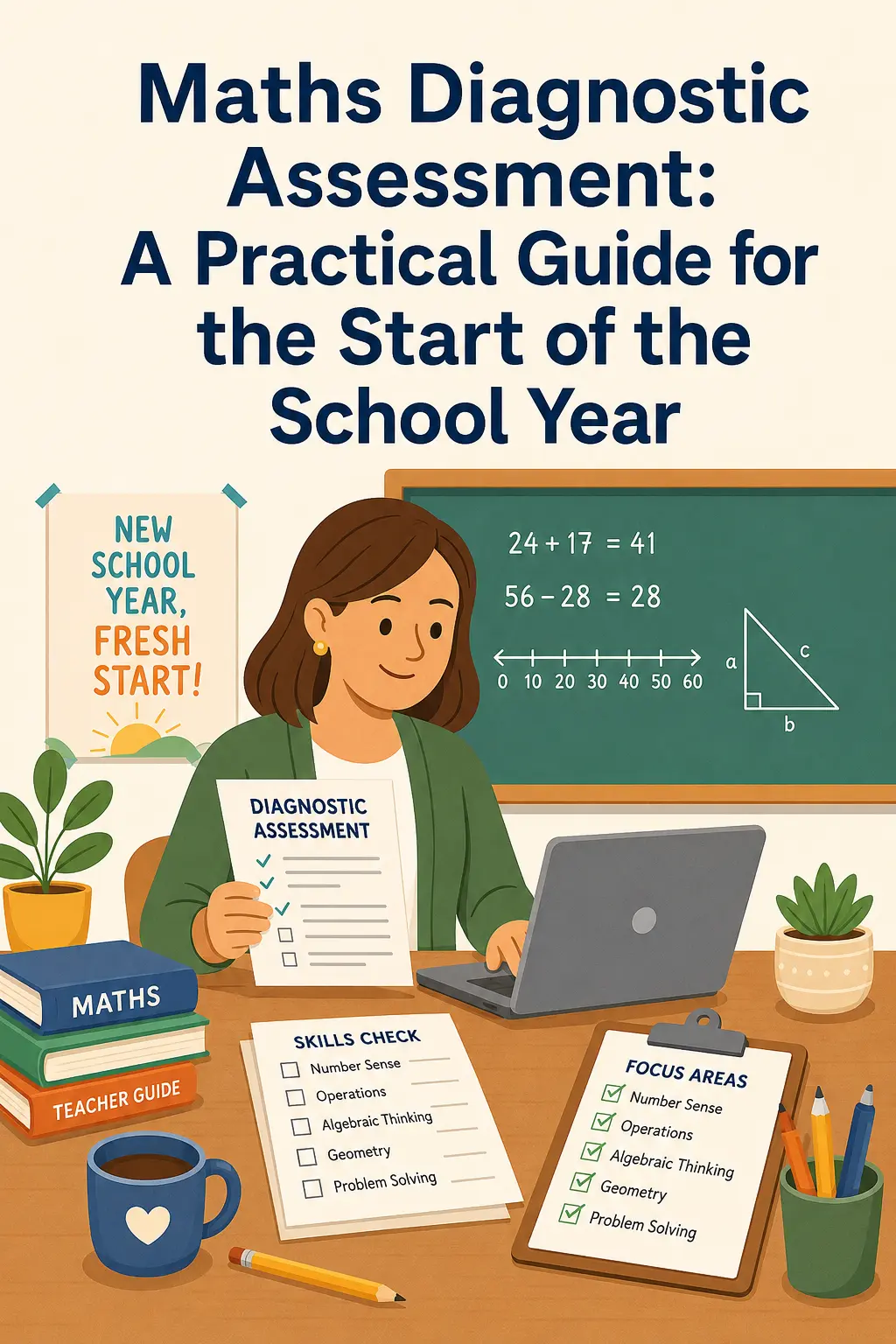
The first maths assessment of the year should not simply generate a mark.
Its purpose is to help answer:
What do my pupils already know?
Where are the gaps?
What needs reviewing before we move on?
That makes a diagnostic assessment different from a traditional end-of-topic test.
Start with prerequisite knowledge
Imagine you are beginning algebra with a Year 8 class.
Before moving ahead, it may be useful to check whether pupils can already:
- work confidently with negative numbers; - use the order of operations; - simplify simple expressions; - understand equality; - solve basic equations.
If those foundations are weak, later algebra will be much more difficult.
Keep the assessment focused
A diagnostic test does not need forty questions.
Ask yourself:
What will the answer to this question tell me?
If five questions provide essentially the same information, you may only need two.
A shorter assessment can provide better evidence when each question has a clear purpose.
Include a range of challenge
An assessment consisting entirely of straightforward questions may identify pupils who are struggling but reveal little about pupils who are already ahead.
Include:
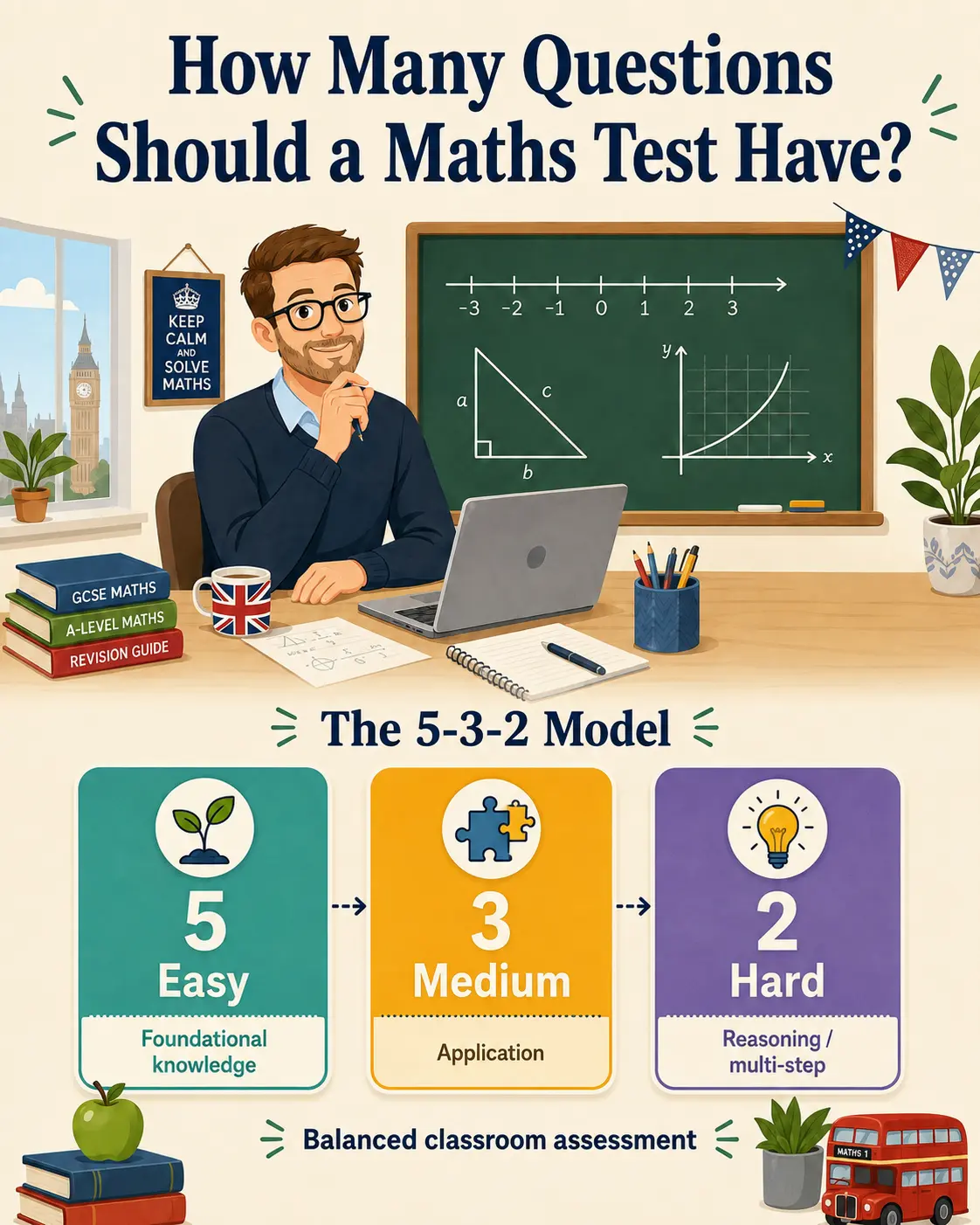
- fundamental skills; - application; - a small number of more demanding problems.
This gives a broader picture of pupil readiness.
Look at patterns, not just percentages
Two pupils could both achieve 60%.
But one may be weak with fractions while the other struggles with graphs.
Those pupils need different support.
For diagnostic assessment, the pattern of responses is often more valuable than the total score.
Use the information immediately
The assessment should affect teaching.
Perhaps:
- most pupils are ready to move on; - one topic needs whole-class revision; - a small group needs intervention; - some pupils need extension work.
A diagnostic assessment is successful when it changes what happens next.
Create diagnostic assessments faster
Teachers can use an AI maths test generator to create an initial set of questions around prerequisite skills, then review and adjust them to match their own pupils.
The technology saves preparation time.
The teacher decides how the results should influence teaching.